
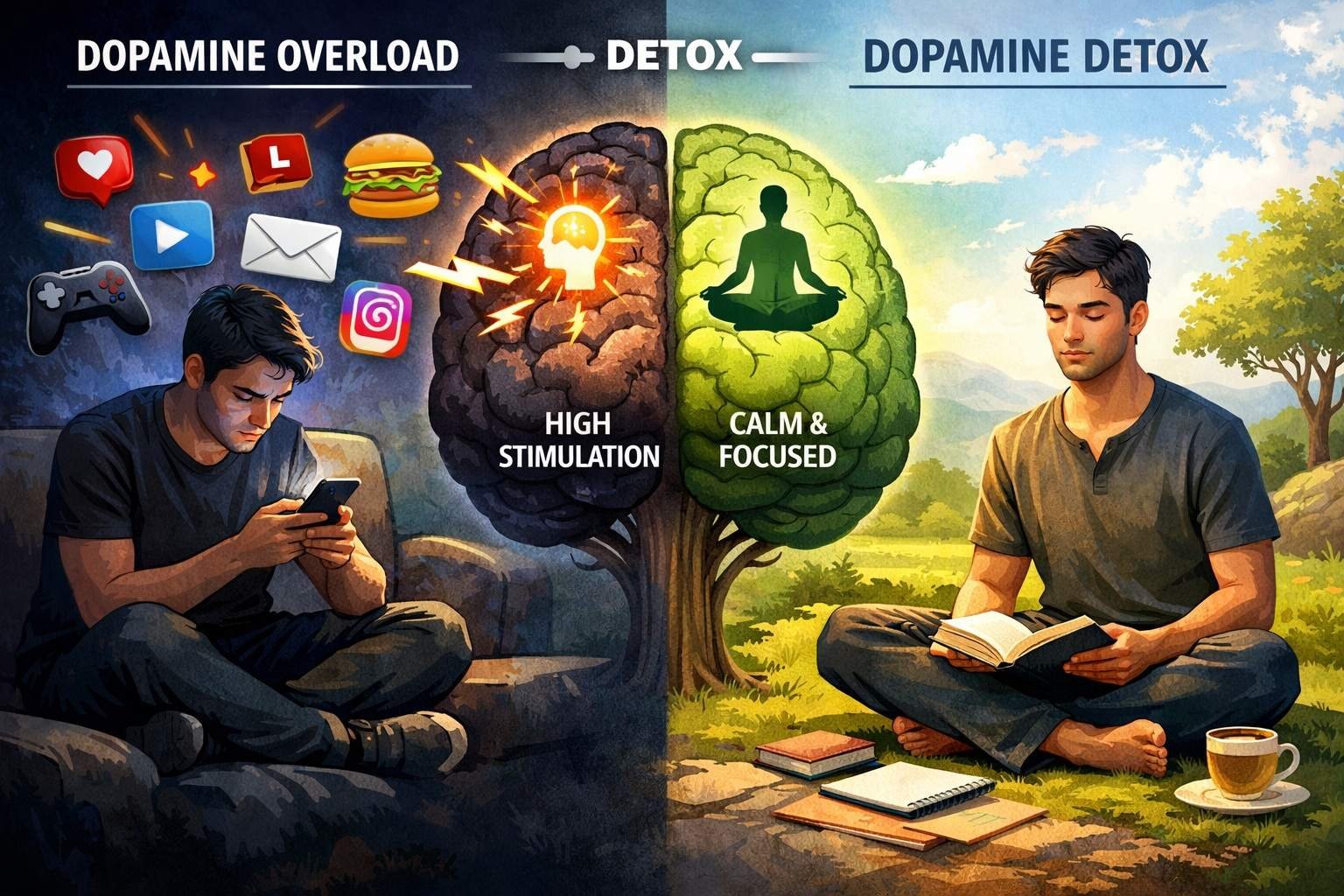
Every few minutes, your phone buzzes. A new notification, a short video, a message, a breaking news alert. Without realizing it, your brain jumps from one stimulus to another—always seeking the next small hit of pleasure. Over time, this constant stimulation can quietly destroy your ability to focus, think deeply, or enjoy simple moments.
This is where the idea of dopamine detoxing comes in. Popular on social media yet often misunderstood, dopamine detox is not about “removing dopamine” from your brain. It’s about resetting your relationship with instant gratification so your mind can regain clarity, motivation, and control.
In this article, we’ll explore the real science behind dopamine detoxing, separate myths from facts, and share practical ways Indian and global readers can use this concept to build a more focused, balanced life.
Table of Contents
- What Is Dopamine?
- The Science Behind Dopamine Detoxing
- Why Our Brains Are Overstimulated Today
- Dopamine Detox: Myth vs Reality
- Benefits of Dopamine Detoxing for Focus
- How to Practice Dopamine Detox (Practical Tips)
- Dopamine Detox in Daily Indian Life
- Common Mistakes to Avoid
- Final Thoughts
- FAQs
What Is Dopamine?
Dopamine is a neurotransmitter, often called the brain’s “reward chemical.” It plays a key role in:
- Motivation and goal-seeking behavior
- Pleasure and reward anticipation
- Learning and habit formation
- Focus and attention
Important fact:
👉 Dopamine is not about pleasure itself, but about the anticipation of reward. That’s why scrolling Instagram or YouTube feels addictive—you’re chasing the next interesting thing.
The Science Behind Dopamine Detoxing
From a neuroscience perspective, dopamine detoxing doesn’t mean eliminating dopamine (which is impossible and unhealthy). Instead, it means reducing overstimulation so your brain’s reward system becomes more sensitive again.
When we constantly consume:
- Short videos
- Social media likes
- Junk food
- Online gaming
- Endless notifications
…the brain adapts by raising the dopamine threshold. This makes normal activities—studying, reading, working—feel boring or exhausting.
A dopamine detox works by:
- Limiting high-dopamine activities temporarily
- Allowing the brain to recalibrate
- Restoring motivation for low-stimulation but meaningful tasks
This concept aligns with research on neuroplasticity, which shows the brain can rewire itself based on repeated behavior.
Why Our Brains Are Overstimulated Today
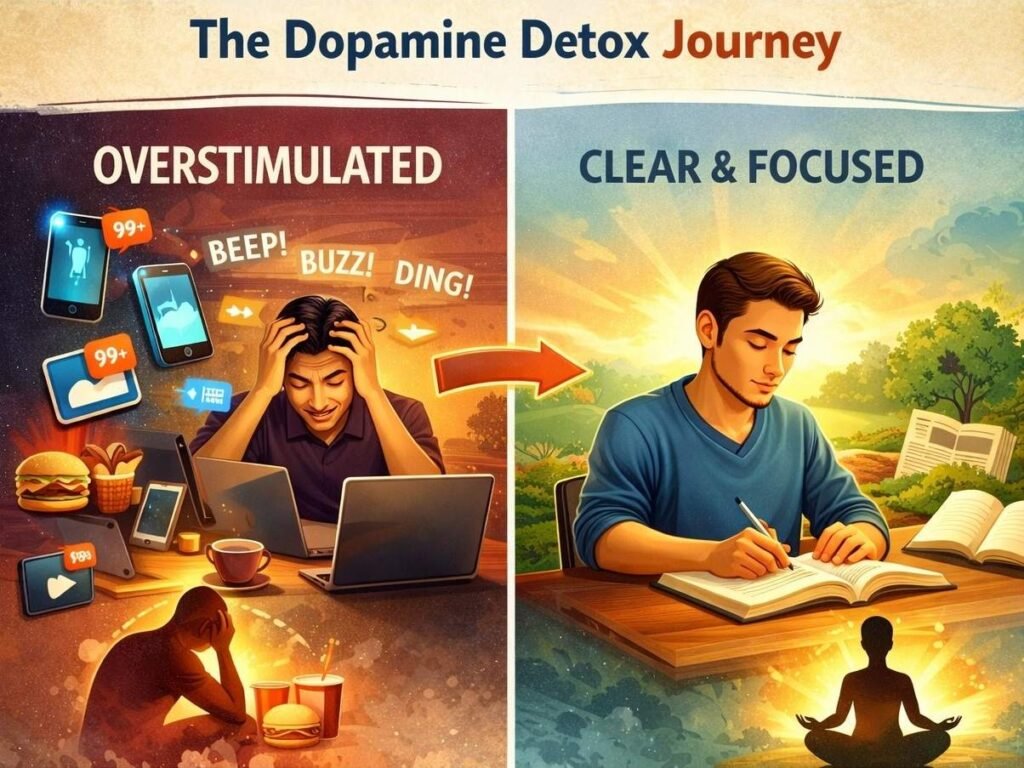
Modern life is engineered for distraction.
Real-World Examples:
- A student checks WhatsApp while studying, then Instagram, then YouTube
- A professional switches between emails, Slack, and news every few minutes
- Even leisure time involves screens instead of rest
In India especially, cheap internet and smartphone access have accelerated this trend. While technology brings opportunity, uncontrolled consumption drains mental energy.
Dopamine Detox: Myth vs Reality
❌ Myths
- Dopamine detox means zero pleasure
- You must avoid talking, music, or fun
- It’s a one-day magical reset
✅ Reality
- It’s about reducing unhealthy stimulation
- Simple joys are allowed
- Consistency matters more than extremes
Think of dopamine detox as mental discipline, not punishment.
Benefits of Dopamine Detoxing for Focus
When done correctly, dopamine detoxing can help:
- Improve concentration and deep work
- Reduce procrastination
- Increase self-control
- Make simple tasks enjoyable again
- Improve sleep quality
- Strengthen long-term motivation
Many people report feeling calmer, clearer, and more present within a few days.
How to Practice Dopamine Detox (Practical Tips)
You don’t need to disappear into the Himalayas. Start small and realistic.
1. Identify High-Dopamine Triggers
Common ones include:
- Social media scrolling
- Reels/short videos
- Online gaming
- Junk food
- Constant music or podcasts
2. Start With a “Low-Stimulus Day”
For 24 hours, reduce:
- Social media
- Entertainment apps
- Fast food
Replace with:
- Reading
- Journaling
- Walking
- Meditation
- Light exercise
3. Use Time Blocking
- Check social media only once or twice a day
- Keep notifications off except essentials
4. Train Your Boredom Muscle
Boredom is not dangerous—it’s where creativity and focus are born.
Try:
- Sitting quietly for 10 minutes
- Doing one task without background noise
5. Focus on Process, Not Pleasure
Learn to enjoy effort:
- Studying without checking phone
- Working without multitasking
Dopamine Detox in Daily Indian Life
You don’t need a Western routine for this to work in India.
Simple Indian-Friendly Ideas:
- Morning walk without phone
- Reading a physical book or newspaper
- Doing household chores mindfully
- Yoga or pranayama
- Writing goals in a notebook
Even reducing screen time during early morning and late night can bring noticeable changes.
Common Mistakes to Avoid
- Going extreme and quitting everything at once
- Treating detox as punishment
- Expecting instant results
- Comparing yourself to others online
Remember: this is about long-term mental health, not productivity hacks alone.
Final Thoughts
Dopamine detoxing is not a trend—it’s a response to an overstimulated world. By consciously reducing instant gratification, you give your brain the space it needs to focus, grow, and find satisfaction in meaningful work.
You don’t need perfection. You need awareness, small changes, and patience. Over time, your mind becomes sharper, calmer, and more in control—something truly valuable in today’s noisy world.
FAQs
1. Is dopamine detox scientifically proven?
There’s no single “dopamine detox protocol,” but the principles align with neuroscience research on reward systems and habit formation.
2. How long should a dopamine detox last?
Start with 24 hours or a few hours daily. Long-term lifestyle changes matter more than duration.
3. Can students benefit from dopamine detoxing?
Yes. It helps improve focus, reduce distraction, and build discipline—especially useful during exam preparation.
4. Is dopamine detox the same as digital detox?
Not exactly. Digital detox focuses on devices, while dopamine detox focuses on behavior and reward patterns.
5. Can dopamine detox improve mental health?
It can support mental clarity and reduce stress, but it’s not a replacement for professional mental health care.
Published on trendepost.com – Exploring modern science, mindset, and meaningful living.